

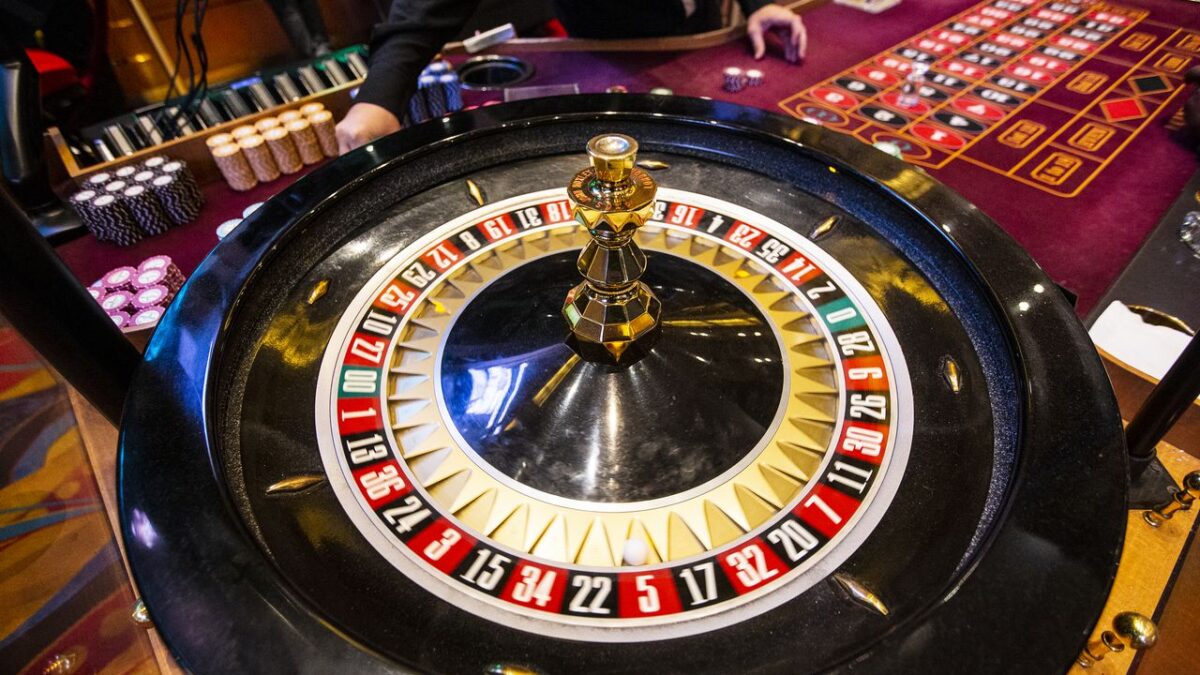
For UK players looking for adventure in the tombs of ancient Egypt, the Book of Dead slot game offers captivating gameplay, but the foundation of that fair play is a intricate and rigorously tested technology: Random Number Generation strangbookgroup.com. This crucial system, often referred to as RNG, is the digital heartbeat of every spin, assuring that each outcome is entirely unrelated, unpredictable, and free from manipulation. The reliability of this process is not merely a claim by the developer, Play’n GO, but a verified fact, undergoing stringent audits by independent testing laboratories approved by the UK Gambling Commission. Understanding how this RNG works provides players with the assurance that their journey alongside Rich Wilde is controlled by genuine chance, where every scatter symbol, expanding wild, and free spin round is the product of a approved and transparent random event, preserving the highest standards of fairness mandated for the British market.
The Function of RNG in Modern Online Slots
At its core, a Random Number Generator is a sophisticated algorithm intended to generate a continuous, unending sequence of numbers that are without any recognizable pattern. In the context of the Book of Dead slot, this stream of numbers is generated at a phenomenal speed, even when the game is not being played. The moment a player presses the spin button, the RNG selects a particular number from this sequence, which is then transformed by the game’s software into a relevant set of symbols on the reels. This process occurs in milliseconds, separating the outcome entirely from any earlier or future spins. This technology basically supplants the physical mechanisms of traditional fruit machines, securing digital integrity. For UK players, this indicates the game’s volatility, its hit frequency, and the potential for securing the coveted Book of Dead bonus round are all accurately determined by this random digital process, forming a equitable and unforeseeable gaming environment that mirrors the randomness of a physical deck of cards or a dice roll.
From Process to Ancient Symbols
The path from a raw number to the famous Ankhs, Scarabs, and the Book of Dead symbol itself is a fascinating translation controlled by exact mathematical mapping. Each potential position on the game’s five reels is given a wide range of values from the RNG’s output. The algorithm selects values that correspond to certain stops on each virtual reel strip, which is a pre-defined set of symbols with set frequencies. The arrangement of these reel strips is what establishes the game’s theoretical Return to Player (RTP). Therefore, the RNG does not directly ‘choose’ a symbol; it chooses a stop number, and the game’s logic then displays the symbol situated at that position on the pre-constructed reel. This complex process ensures that the published RTP of approximately 96.21% for Book of Dead is mathematically reached over an long period through pure randomness, not through pre-set wins or losses for any single player.
Ensuring Independence of Every Spin
A key aspect often misunderstood by users is the concept of independence. A certified RNG guarantees that each spin event is completely isolated. The algorithm has no memory of past results, nor can it affect future ones. Whether a player has just triggered ten free spins or has undergone a hundred spins without a significant win, the probability for the very next spin remains constant. The RNG does not operate on cycles or schedules to produce wins; it simply delivers the next number in its enormous, unpredictable sequence. This absolute independence is the cornerstone of fair play, ensuring that strategies based on past outcomes are irrelevant and that every click gives the same fresh, random chance as the first spin of the session.
Verification and UK Compliance Compliance
In the United Kingdom, the operation of any online slot, including Book of Dead, is contingent upon rigorous third-party testing of its RNG and overall software. This is not a voluntary measure but a legal requirement enforced by the UK Gambling Commission (UKGC), one of the strictest regulatory bodies globally. Before a game can be presented to UK players, it must undergo exhaustive testing by an independent testing laboratory. These labs, such as eCOGRA, iTech Labs, or GLI, dissect the game’s source code, run simulations covering billions of spins, and statistically evaluate the output to confirm the randomness and integrity of the RNG. They verify that the theoretical RTP corresponds to the practical outcomes and that no hidden functions could influence results. A game that passes receives a certificate of compliance, which is a required prerequisite for the UKGC licence owned by the casino offering the title.
The UKGC’s Position on Fairness and RNG
The UK Gambling Commission’s licensing conditions specifically mandate that all games of chance must operate fairly, with clear rules and random outcomes. Their technical standards demand that RNGs used by licensees are reliable, unpredictable, and non-repeatable. Furthermore, the UKGC stresses that these RNGs are tested at regular periods, not just once before launch. This means that the version of Book of Dead offered to UK players today is subject to ongoing audits to ensure continued compliance. Any casino offering this slot to a British audience must be able to provide evidence of this certification upon request. This regulatory framework offers a powerful layer of consumer protection, ensuring that the game’s advertised features, such as the chance of the Book symbol expanding to cover an entire reel, are provided through verified random processes, not arbitrary decisions.
Understanding RTP and Variance in Book of Dead
While the RNG ensures unpredictability, the game’s mathematical design governs the long-term statistical outcome. Book of Dead has a published Return to Player (RTP) of around 96.21%, which represents the theoretical percentage of all wagered money the slot will pay back to players over an extended timeframe, often millions of spins. This figure is closely linked to the RNG’s distribution of outcomes across the game’s reel strips. Crucially, the RNG does not ‘target’ this percentage for an individual play; fluctuation, or volatility, plays a huge part. Book of Dead is renowned for its high volatility. This means wins may be less frequent but have the potential to be bigger when they arise, such as during the free spins feature. The RNG supports this model by generating the sequences that lead to both the dry spells and the substantial winnings, all within the mathematical confines of the game’s design, which has been confirmed as fair and accurate by independent testers.
Debunking Common RNG Misconceptions
Several persistent myths surround RNGs in machines, and addressing them is key to informed participation. One prevalent idea is that a game is ‘due’ for a win after a losing run, which is a fallacy known as the gambler’s error; the RNG’s independence makes this unfeasible. Another myth is that the timing of a spin influences the result, but the RNG’s number generation is constant and ultra-fast, making human timing irrelevant. Some players also suspect that bonus features or free spin rounds are triggered on a secret clock, but in actuality, each trigger is a random event determined by the same RNG that governs base game spins. The expanding Book symbol, a central component, activates solely based on the random alignment of symbols, not on the amount wagered or the time spent spinning. Recognizing that these features are integrated into the random mathematical model removes notions of artificial control.
The methods by which Players Can Check Game Fairness Independently
Engaged UK players are not forced to simply trust the word of casinos or developers; they have tangible ways to gain assurance about RNG fairness. The most immediate action is to review the casino website for licensing and certification information. A proper UK-facing casino will clearly display its UKGC licence number and often offer links to the test reports from auditing labs like eCOGRA, which may list Book of Dead specifically. Furthermore, players can consult the game’s ‘help’ or ‘information’ screen within the slot itself, where the theoretical RTP is by law required to be stated. While the full RNG certification report is a specialized document, its public availability is a clear indicator of compliance. Players should be wary of any platform that cannot easily present proof of licensing and independent testing, as this is a fundamental requirement for legal operation in the UK market and a key safeguard for the player.
The Significance of Playing at UK-Licensed Casinos
Deciding to play Book of Dead at a casino licensed by the UK Gambling Commission is the single most effective step a player can take to secure the integrity of the RNG. The UKGC’s regulatory framework compels licensees to use only approved, tested software from reputable providers like Play’n GO. These casinos are subject to ongoing audits and must uphold segregation of player funds, offer clear terms, and provide access to responsible gambling tools. An offshore or non-UKGC licensed site may offer the same slot, but the guarantees of RNG verification, fair dispute resolution, and legal protection are greatly diminished. The UKGC seal guarantees that the version of Book of Dead being played has undergone the specific, rigorous testing mandated for British players, making the licensed casino the safe gateway to a genuinely fair gaming experience.
RNG’s Impact on Bonus Features and Free Spins
The exciting bonus features in Book of Dead represent where the RNG’s role becomes particularly exciting. The shift to the free spins round happens when three or more Book scatter symbols land randomly on the reels, an event dictated by the RNG’s selection of reel stops. Once in the bonus round, the RNG keeps working with consistent fairness. The picking of the special expanding symbol, which is picked unpredictably before the free spins commence, is yet another product determined by the algorithm. Each free spin result is then created on its own, with the chance for the chosen symbol to expand and create major victories. The entire sequence, from trigger to conclusion, represents a series of random events, ensuring the bonus round keeps the same level of unpredictability and fairness as the base game, a process rigorously checked during certification audits.
Future-Proofing: RNG and Evolving Slot Technology
As slot technology evolves with features like cascading reels, megaways mechanics, and complex bonus buys, the basic necessity for certified RNG continues unaltered. Such algorithms may need to handle more complex calculations to determine symbol placement or feature triggers, but the central idea of generating unpredictable, independent outcomes remains. For a game like Book of Dead, which stands as a mainstay in the UK market, its RNG certification does not happen just once. Any significant update or re-release would require new testing. This commitment to continuous validation ensures that as games evolve, player protection and fair play advance alongside, maintaining the dependable setting that allows players to enjoy the immersive experience of the slot with full trust in its underlying mechanics.
FAQ
How does an RNG and why is it important for Book of Dead?
An RNG (Random Number Generator) is a certified algorithm that generates entirely unpredictable number sequences. In Book of Dead, it determines every spin’s outcome, ensuring each result is independent and fair. Its certification by independent labs, as required by UK law, assures that the game’s features, like the free spins round, are triggered entirely by chance, not manipulation, upholding the slot’s fairness for all UK players.
What guarantees are there the Book of Dead slot is trustworthy in the UK?
You can be assured by playing at UKGC-licensed casinos, which are by law bound to provide games with third-party verified RNGs. Check the casino footer for the UKGC licence number and references to tester approvals (e.g., eCOGRA). The game’s own information screen must also show its expected RTP (approx. 96.21%). These aggregate measures offer concrete proof of adherence with the UK’s stringent fairness regulations.
Does the RNG make the game more likely to pay after a losing streak?
No, it does not. This is a common fallacy known as the gambler’s fallacy. A verified RNG guarantees every spin is entirely independent of previous results. The likelihood of winning on any given spin remains unchanged, regardless of past outcomes. The algorithm has no memory and cannot modify results to ‘balance’ streaks, making strategies based on past spins ineffective.
Are casinos able to or software provider interfere with the RNG?
In the regulated UK market, tampering of a certified RNG is essentially unfeasible and would be unlawful. The game’s software, along with its RNG, is secured and examined by independent auditors before launch and at routine intervals. Any meddling would be discovered in following audits, prompting harsh penalties from the UK Gambling Commission, notably licence cancellation for the casino.
Is the choosing of the expanding symbol in free spins genuinely random?
Yes, the determination of the particular expanding symbol during the Book of Dead free spins feature is a wholly random event decided by the same approved RNG. Before the free spins start, the algorithm randomly picks one normal symbol to become the expander. This process is fundamental to the game’s mathematical model and is validated during fairness testing to confirm no bias or foreseeability.


Leave A Comment
You must be logged in to post a comment.